

Rose City Land Clearing connects Tyler-area property owners with a local land clearing provider for access road & driveway clearing across Tyler and nearby East Texas properties.
An access route has to serve the vehicle that will use it, not merely look open from the road.
A Tyler-area approach may cross a county-road ditch, climb through red sandy-loam ground, pass between pine rows, and arrive at a homesite with no room for a truck to turn.
The plan establishes route width, overhead clearance, turn geometry, drainage crossings, soft spots, utility conflicts, and where spoils or mulch may remain.
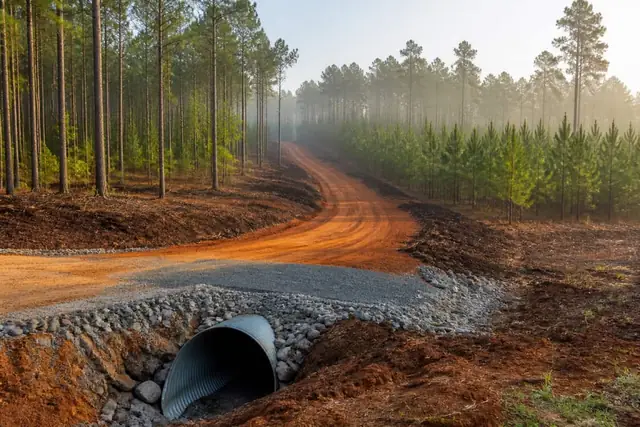
Vegetation clearing creates a corridor; a durable drive may still need culvert work, excavation, geotextile, suitable base, compaction, and a crown or crossfall.
Lay out a route that the largest expected vehicle can use
The route should be walked from the public entrance to the turnaround with the actual delivery, emergency, construction, or land-management vehicle in mind. Width, curve radius, overhead limbs, side slope, ditch crossings, gates, and meeting points are marked before brush is cut. The Railroad Commission damage-prevention program supplies official locate guidance wherever culverts, grading, or grubbing may move earth.
A red surface can hide different bearing conditions along the same alignment. The USDA NRCS Web Soil Survey helps screen mapped soils and drainage, while test holes, current moisture, and observed rutting determine whether a segment needs simple vegetation opening, unsuitable-material removal, or a designed road section.
Distinguish corridor clearing from a finished driveway
Mulched shoulders and a passable lane do not automatically include culvert design, geotextile, base rock, compaction, crown, ditches, or a durable all-weather surface. Where clearing is part of qualifying construction disturbance, the TCEQ construction-stormwater page is the state reference for coverage and control responsibilities.
The owner should confirm entrance and drainage requirements with the agency maintaining the road. The Smith County official site provides current county contacts for Smith County segments; municipal streets and state highways may use different review paths, so the quote lists the governing frontage rather than assuming one entrance detail fits all.