

Rose City Land Clearing connects Bullard property owners with a local land clearing provider for forestry mulching, lot opening, brush clearing, and site support around Bullard.
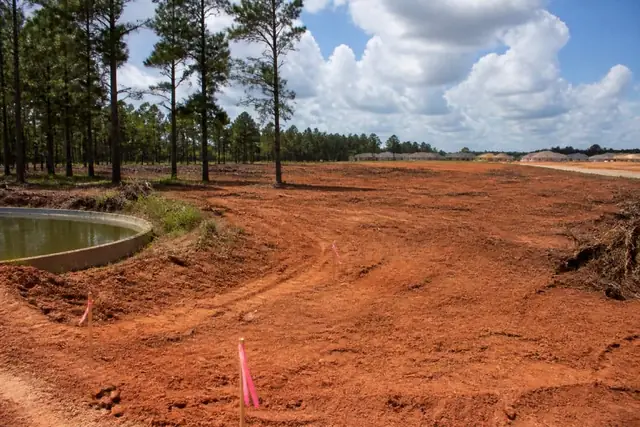
Bullard-area parcels can combine former grazing ground, a stock-tank edge, new-home stakes, and surviving fence rows on the same tract. The clearing plan should preserve what still serves the property while opening only the footprint and access needed now.
Old wire, soft pond approaches, scattered sweetgum, and long utility runs are common cost drivers that aerial acreage does not reveal. Walking the route before pricing separates easy field mowing from grubbing, haul-off, and wet-ground work.
Access, fence corridors, homesite clearing, and stock-pond work should be staged as distinct phases. An owner can then approve the first useful opening without committing every acre to the same method or finish.
Rose City Land Clearing connects Bullard inquiries with a provider who verifies the location, access, vegetation, and requested handoff before issuing a direct proposal.
Read former pasture and construction ground as separate zones
A green field edge may carry firm upland soil while the route beside an old tank remains soft long after rain. The USDA NRCS Web Soil Survey helps screen mapped differences, but the provider checks actual pond approaches, buried organics, erosion, and vehicle turning before choosing a production route.
New-home corridors add utility and excavation conflicts to the vegetation work. The Railroad Commission of Texas damage-prevention program describes official locate responsibilities, and the owner supplies information for private ranch water, septic, electric, or irrigation lines outside the public marking process.
Stage Bullard clearing around exposed soil and pasture recovery
A subdivision phase or larger homesite can fall within a common construction plan even when one owner disturbs less than an acre. The TCEQ construction-stormwater resource explains that coverage framework, so the parties should assign erosion-control and stabilization responsibility before clearing crosses from pasture into building ground.
Weather timing affects both fresh grade and the grass intended to remain. National Weather Service Shreveport forecasts support scheduling, while the finish is evaluated from field rutting, runoff paths, exposed root mass, and whether future mowing equipment can reach the reclaimed strip.