

Rose City Land Clearing connects Flint property owners with a local land clearing provider for forestry mulching, lot opening, brush clearing, and site support around Flint.
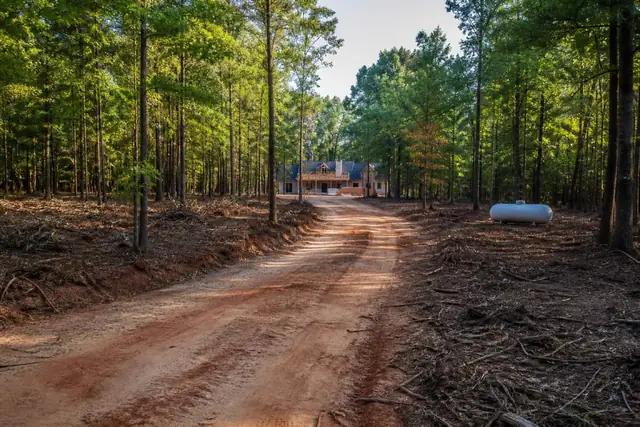
Flint-area projects commonly begin with a long drive through pine and sweetgum before reaching a custom homesite deeper on the parcel. Route geometry and construction delivery needs can control the clearing scope more than the square footage at the destination.
Overhead limbs, soft crossings, propane or septic planning, and a place for trailers to turn should be resolved before the lane is opened. A narrow pickup path is not automatically a safe construction entrance.
Driveway clearing and homesite opening should be laid out together, then priced as separate deliverables. That keeps culvert, base, grubbing, and final-grade expectations from being confused with vegetation reduction.
Rose City Land Clearing sends Flint inquiries to a provider who walks the full approach, confirms the requested endpoint, and writes a parcel-specific proposal.
Design the clearing envelope from the destination backward
The house or work area needs a usable turnaround, unloading zone, and protected utility path before a corridor is cut toward the road. Any earth disturbance along that alignment should follow the Railroad Commission of Texas damage-prevention guidance, with private propane, septic, well, and electrical systems identified by the owner and appropriate specialists.
Mapped soils can signal where an alignment crosses different landscape positions. The USDA NRCS Web Soil Survey supports early route comparison, but culvert condition, actual bearing, side slope, and wet-weather access determine whether the cleared lane also needs designed road improvements.
Confirm the frontage authority and protect wet-weather access
For Smith County road segments, the Smith County official site is the starting point for current department contacts and entrance questions. A municipal or state-maintained frontage follows its own process, so the owner identifies the controlling road before culvert or ditch work appears in the construction scope.
Forecasts from National Weather Service Shreveport help avoid opening a long interior route immediately before heavy weather. The crew still checks the deepest crossing and proposed truck staging onsite, because regional conditions cannot establish whether one private lane is ready for traffic.