
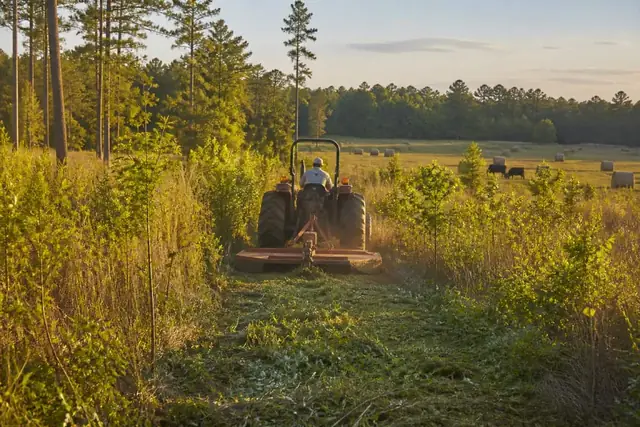

Rose City Land Clearing connects Tyler-area property owners with a local land clearing provider for pasture reclamation across Tyler and nearby East Texas properties.
Pasture reclamation is a vegetation-management project rather than a single mowing date, especially once sweetgum, yaupon, pine volunteers, and fence-row brush have advanced.
East Texas moisture can support fast regrowth where grass cover is thin, while rolling ground and stock-pond margins limit where heavy equipment should travel.
The walk separates recoverable grass, woody patches, wet corners, eroded routes, fences, shade trees, and any areas that should remain as habitat.
A first pass restores access and sunlight; follow-up grazing, mowing, reseeding, fertility, and brush control determine whether the reclaimed acres stay open.
Separate recoverable forage from woody encroachment
A neglected pasture may contain useful grass, dense sweetgum patches, scattered shade, erosion scars, wet pond approaches, and old livestock infrastructure. The USDA NRCS pasture and hay planting standard page shows that forage establishment is a defined conservation practice, so the clearing proposal focuses on access and woody reduction while seeding, fertility, and grazing decisions remain part of a broader land plan.
Yaupon, greenbrier, volunteer hardwoods, and privet respond differently to mowing, mulching, or extraction. The Texas A&M Forest Service vegetation-management resource supports species-aware treatment, allowing the owner to keep useful shade and habitat pockets instead of flattening every stem on the acreage.
Build a first pass that future maintenance can hold
Mapped soil and slope can help identify soft corners or erosion-prone travel routes before machinery enters. The USDA NRCS Web Soil Survey is a screening tool, while the provider confirms current moisture, fence openings, buried hazards, and whether a tractor can revisit the finished lanes without crossing unstable ground.
Timing around rainfall matters when cut ground must support later mowing or planting. National Weather Service Shreveport forecasts inform the work window, but the finish should be judged by visible rutting, remaining stobs, debris placement, and access to the acres the owner plans to maintain.