
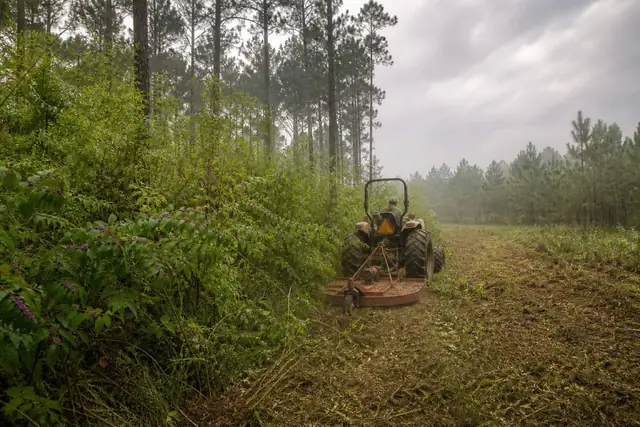
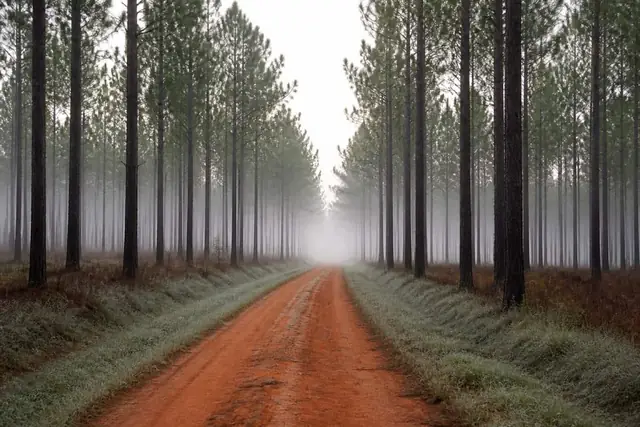
Rose City Land Clearing connects Tyler-area property owners with a local land clearing provider for brush & underbrush clearing across Tyler and nearby East Texas properties.
Brush and underbrush clearing works below the canopy, separating the stems that block movement from the trees an owner wants to retain.
East Texas thickets can combine yaupon, greenbrier, beautyberry, privet, grapevine, and young sweetgum in a layer that hides ditches, wire, stumps, and uneven ground.
A useful plan divides machine-accessible patches from hand-cut zones around trunks, utilities, buildings, and tight fence corners.
Owners can choose a rough access opening, a cleaner park-like understory, or a staged first pass that exposes the land before the next decision.
Choose what opens and what stays beneath the canopy
Underbrush clearing is most useful when the owner marks a purpose: a walking lane, sight line, fence approach, defensible working strip, or more sunlight beneath selected trees. The Texas A&M Forest Service vegetation-management guidance describes East Texas brush as a mix that should be assessed by species and land objective, so a selective scope can retain beautyberry, screening, or habitat patches while removing the stems that block use.
Privet and Chinese tallow should not be treated as interchangeable with every native shrub. The Texas A&M Forest Service invasive-plant resource identifies aggressive East Texas species and their competitive effects; the quote can then distinguish initial mechanical opening from the monitoring or follow-up treatment needed where roots, seed, or resprouting remain.
Protect the narrow edges that brush tends to hide
Brush frequently closes over meters, private service lines, shallow drainage, and old wire at the exact edges a machine would use. Before any grubbing or earth movement, the Railroad Commission of Texas damage-prevention page provides official locate guidance, while onsite markings identify owner-maintained lines and features outside the public locate system.
A clean-looking understory is not automatically a wildfire prescription. The Texas A&M Forest Service wildland fuel guide notes that East Texas pine, brush, grass, and slash combinations behave differently, so cut material placement and remaining ladder fuels should be discussed explicitly instead of using a generic claim that brush removal makes a property fireproof.