
Rose City Land Clearing connects Arp property owners with a local land clearing provider for forestry mulching, lot opening, brush clearing, and site support around Arp.
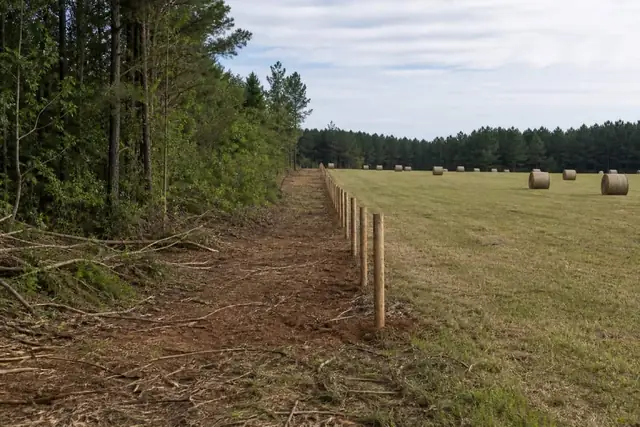
Arp-area acreage can concentrate its hardest work in a grown-over fence line even when the adjoining hay meadow is open. Wire, posts, trees, and drainage crossings turn that narrow strip into a careful access project rather than a simple mowing calculation.
The recorded boundary, intended replacement fence, and width needed for future maintenance should be agreed before brush is removed. Clearing wider than the next task requires creates more debris without necessarily improving the fence.
A boundary walk and a defined maintenance corridor matter more than pushing the broadest machine lane. The proposal can isolate contaminated wire sections, keeper shade, and hand-work edges before production begins.
Rose City Land Clearing connects Arp requests with a provider who checks the full fence route and writes the chosen clearing and disposal method into a direct quote.
Expose wire and boundaries before a mulcher enters the line
Fence wire can be suspended in trunks, buried beneath leaves, or abandoned beside the current line. Any new posts, brace removal, or grubbing should follow the Railroad Commission of Texas damage-prevention program for locate responsibilities, with the owner also identifying private water and electrical services across the acreage.
Not every shrub at the field edge needs removal. The Texas A&M Forest Service vegetation-management guidance supports matching treatment to plant conditions and objectives, letting the owner retain useful shade or habitat while opening the exact strip required for inspection and repair.
Plan crossing width and long-term access along the meadow edge
Mapped drainage and soil differences can explain why one fence corner stays wet. The USDA NRCS Web Soil Survey is an early planning layer; onsite rutting, ditch depth, culverts, and the owner’s maintenance tractor determine the working width and whether a crossing needs separate improvement.
For a Smith County roadside segment, current contacts begin at the Smith County official site. The owner must identify whether the line touches county, municipal, state, railroad, utility, or private right-of-way before brush is removed beyond the surveyed parcel.