
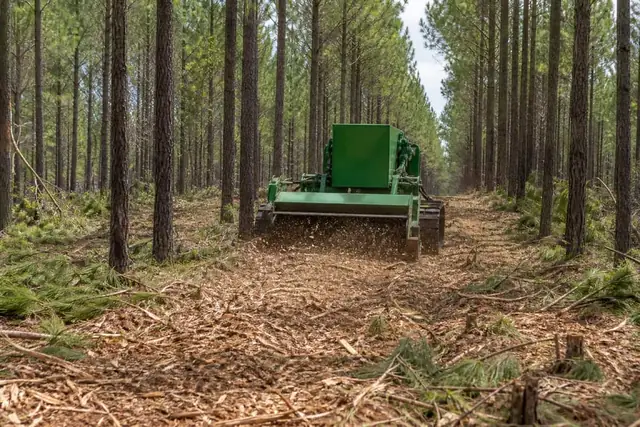

Rose City Land Clearing connects Tyler-area property owners with a local land clearing provider for pine plantation thinning cleanup across Tyler and nearby East Texas properties.
Pine plantation thinning decisions belong to a forester or qualified timber professional; the clearing scope supports that prescription rather than inventing one.
Planted loblolly rows around Tyler often hold yaupon and volunteer hardwood beneath them, while thinning leaves tops, limbs, stobs, and travel lanes that affect later access.
The cleanup walk uses the prescription and logging layout to identify residual-tree protection, slash treatment, row access, wet spots, loading areas, and material that must remain.
Mulching selected slash can improve movement and reduce rough fuel continuity, but it must be balanced against soil disturbance, retained habitat, and the landowner's next objective.
Keep the forestry prescription separate from slash cleanup
Tree selection, stocking, timing, and market decisions belong to a qualified forestry plan. The Texas A&M Forest Service thinning guidance explains how thinning reallocates resources to selected trees and why stand quality matters; the offered cleanup service works after or around that prescription by opening rows, processing designated slash, and protecting residual stems.
Plantation spacing and access reflect how the stand was established, prior treatments, wet areas, and the logger’s traffic pattern. The Texas A&M Forest Service pine-establishment resource provides regional silvicultural context, but row width alone does not authorize a mulcher to enter beneath low crowns or across compacted, damaged ground.
Treat slash, stobs, and young brush as separate cleanup problems
Tops and limbs can block inspection lanes, while high stobs threaten tires and dense yaupon may return quickly under the opened canopy. The Texas A&M Forest Service East Texas fuel guide describes timber, brush, grass, and slash fuel arrangements, allowing the owner and forester to discuss material distribution without claiming that every chipped lane is a complete wildfire treatment.
Soil protection matters where repeated passes converge at decks and landings. The USDA NRCS Web Soil Survey helps identify mapped variation before the walk; current moisture, rutting, residual-tree roots, and the planned future use determine which lanes can carry cleanup equipment and where slash should remain.