

Rose City Land Clearing connects Tyler-area property owners with a local land clearing provider for fence line clearing across Tyler and nearby East Texas properties.
Fence-line clearing is narrow work with more hidden hazards than the width suggests: barbed wire, woven mesh, old posts, dumped metal, and roots often disappear inside the vegetation.
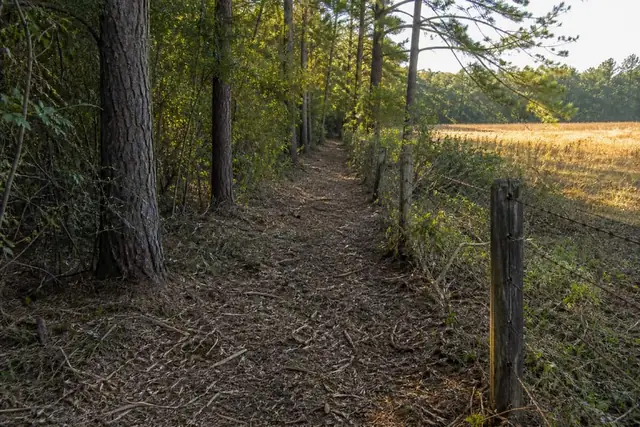
Smith County acreage commonly carries pine or pasture edges where privet and yaupon close over a neglected line and sweetgum volunteers push directly through the wire.
The boundary is confirmed before cutting, and the route is walked for wire, utilities, gates, water crossings, and keeper shade trees.
The finished width should match the next task—inspection, repair access, post replacement, or a maintainable strip—rather than an arbitrary machine path.
Expose the true boundary before widening the corridor
Old barbed wire may wander around trees, disappear under privet, or sit inside the recorded property line. The owner should supply reliable boundary information before clearing begins, then mark whether the goal is inspection access, wire replacement, a livestock-safe lane, or long-term mowing. The Railroad Commission excavation-safety guidance is relevant wherever posts, braces, or root removal will disturb ground near buried facilities.
A fence row can contain native screening and habitat as well as aggressive brush. The Texas A&M Forest Service vegetation-management guide supports matching treatment to vegetation and land objectives, allowing the scope to preserve selected shade or screening instead of automatically stripping both sides of the wire.
Price the hazards hidden inside a narrow working strip
Loose wire, T-posts, old insulators, concrete footings, rocks, washouts, and wet crossings can slow a fence corridor far more than its acreage suggests. The USDA NRCS Web Soil Survey can flag mapped soil and drainage differences before the walk; the machine route is finalized from actual bearing and the location of every known obstacle.
Roadside or county-managed edges require confirmation from the authority responsible for that segment. The Smith County official site is the starting point for current county contacts on Smith County parcels, while municipal, state-highway, utility, and private-easement sections may carry separate permissions that the owner must resolve.