
Rose City Land Clearing connects Tyler-area property owners with a local land clearing provider for forestry mulching across Tyler and nearby East Texas properties.
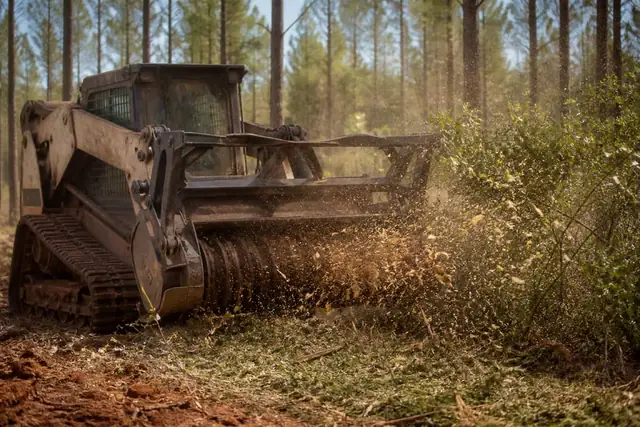
A forestry mulcher reduces standing brush at ground level while the carrier travels through the growth, so cutting and material reduction happen in one movement.
Around Tyler, the useful targets are often dense yaupon beneath pine, old privet screens, greenbrier tangles, storm slash, and volunteer hardwoods crowding a route through the property.
The walk-through marks keeper trunks, checks whether the understory hides wire or dumped material, and decides where chips may remain without burying root flares or blocking drainage.
The normal finish is a passable surface under a loose mulch layer; a bare construction pad requires separate grubbing, raking, and grading.
Match the mulching pass to the understory, not just the acreage
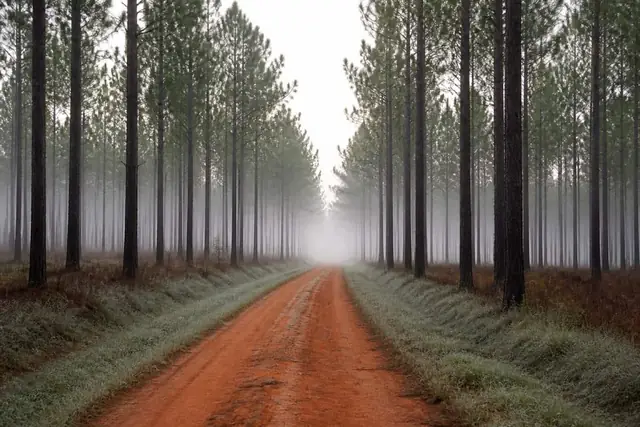
A Pineywoods tract may hold clean pine rows in one corner and a dense mix of yaupon, greenbrier, privet, and sweetgum in another. The Texas A&M Forest Service vegetation-management guide supports identifying what is growing before choosing a treatment, so the quote separates brush density, stem size, and keeper-tree zones instead of applying one production rate everywhere.
Wire, abandoned material, shallow private lines, and low branches can disappear beneath leaf cover. Where the planned work may disturb soil, the Railroad Commission of Texas damage-prevention program is the official reference for excavation and locate responsibilities; the field walk still has to expose machine hazards and mark private facilities that a public locate may not identify.
Specify the chip layer and the next use of the ground
Mulching leaves woody fiber onsite, which can protect travel lanes from immediate surface disturbance but does not create a compacted pad or remove buried root mass. The USDA NRCS Web Soil Survey can flag mapped soil differences during planning, while moisture, bearing, and the depth of the chip mat are confirmed on the tract before deciding where repeated equipment traffic belongs.
Slash, brush, and young pine create different fuel arrangements after treatment. The Texas A&M Forest Service East Texas fuel guide explains how timber, brush, grass, and slash combinations affect wildfire behavior; the work order therefore states whether chips are spread thin, concentrated in travel lanes, or kept away from trunks and structures rather than promising that mulching alone eliminates fire risk.